

The Dream and the Reality: Can Foreigners Truly Own Beachfront in Costa Rica?

Can foreigners own beachfront property in Costa Rica? Not in the traditional titled sense—but that doesn’t mean beachfront living is out of reach. Costa Rica uses a unique concession system that legally allows foreigners to enjoy, develop, and invest in beachfront property securely and long-term.
The Allure of Costa Rica’s Coastline for Foreign Buyers
The vision of waking up to the sound of waves, with pristine sands just steps from your door, is a powerful draw for many seeking to establish a new life or an investment in Costa Rica. Our beautiful Pacific and Caribbean coastlines offer unparalleled natural beauty, vibrant wildlife, and that quintessential Pura Vida lifestyle. It’s easy to envision a retirement or vacation home perfectly situated to take advantage of this idyllic setting.
Addressing the Common Misconception About Beachfront Ownership
Naturally, when dreaming of such a property, the assumption is often that you can simply purchase a titled piece of land right on the beach, just as you might in many other countries. However, Costa Rica operates under a unique legal framework concerning its coastal areas. This framework is designed to protect its natural treasures and ensure public access to its stunning shorelines for generations to come.
The Short Answer: No, But Here’s the Full Story for Secure Living
The straightforward answer to whether foreigners can directly own beachfront property in Costa Rica is no, not in the traditional sense of titled fee simple ownership. But please, don’t let that dampen your dream. This initial ‘no’ is just the beginning of a much richer and more secure story. While direct title to the beach itself isn’t possible, Costa Rican law provides a robust and long-term pathway to legally possess and utilize beachfront properties through a system of government concessions. Understanding this system is the key to unlocking your dream of a secure beachfront lifestyle here.
Unpacking Costa Rica’s Maritime Zone Law (Zona Marítimo-Terrestre)
To truly grasp how beachfront living works in Costa Rica, it’s essential to understand the cornerstone of its coastal regulation: the Ley sobre la Zona Marítimo-Terrestre, or Maritime Zone Law. This legislation is fundamental to ensuring the country’s natural beauty remains accessible and protected.
The Historical Context and Legislative Purpose of the Ley sobre la Zona Marítimo-Terrestre
Enacted in 1977, the Maritime Zone Law was a visionary piece of legislation aimed at safeguarding Costa Rica’s precious coastlines. Its primary purpose is to ensure that the country’s beaches and the land immediately adjacent to them remain public domain. This prevents unregulated development, preserves ecological integrity, and guarantees that all citizens and visitors have equal access to these natural wonders. It reflects Costa Rica’s deep commitment to environmental protection and its unique ‘no fences on the beach’ philosophy.
Defining the Public Zone: The First 50 Meters from the High Tide Line
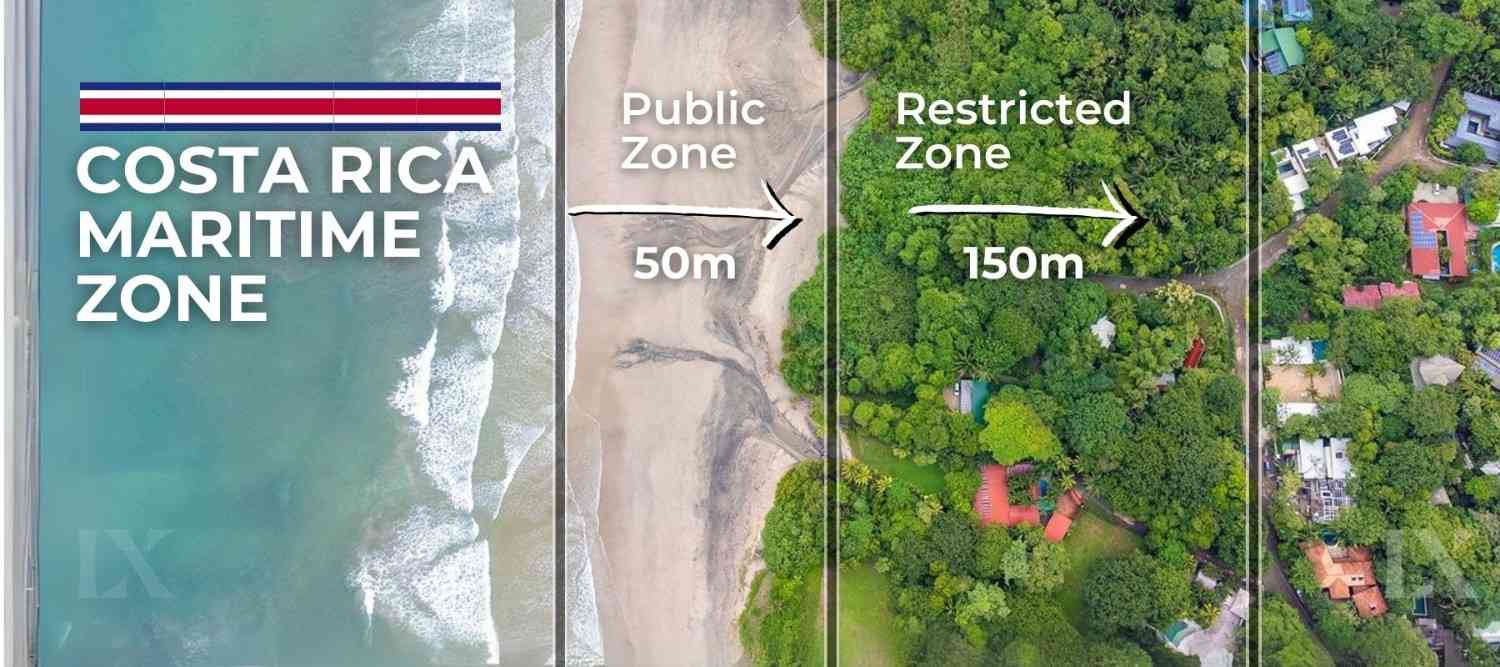
The Maritime Zone Law divides the coastal strip into two distinct areas, starting from the mean high tide line. The first of these is the “Public Zone” (Zona Pública). This zone extends 50 meters (approximately 164 feet) inland from the high tide mark.
- No Private Ownership: The Public Zone is, by law, completely off-limits to any form of private appropriation. No permanent structures, fences, or private development are permitted here.
- Guaranteed Access: This area is always considered public property, ensuring everyone has the right to walk, enjoy, and access the beach freely.
Understanding the Restricted Zone: Navigating the Next 150 Meters Inland
Beyond the Public Zone lies the “Restricted Zone” (Zona Restringida), which extends another 150 meters (approximately 492 feet) inland. This means the entire Maritime Zone covers the first 200 meters (about 656 feet) from the high tide line. It is within this Restricted Zone that the possibility of secure, long-term occupation arises through the concession system.
- Concessions, Not Ownership: While you cannot obtain direct titled ownership of land within the Restricted Zone, you can acquire a concession. A concession is a long-term lease granted by the Costa Rican government, typically for periods ranging from 5 to 20 years, and often renewable.
- Development Potential: Concessions allow for the development and use of property within this zone, ranging from homes and hotels to restaurants and other tourism-related ventures, all subject to specific regulations and a pre-approved master plan for the area.
Who Governs the Maritime Zone: The Roles of Municipalities and the ICT (Costa Rican Tourism Institute)
Navigating the Maritime Zone requires understanding the dual oversight provided by local and national authorities. This shared governance ensures both local needs and national development goals are met.
- Municipalities: Local municipalities are primarily responsible for the day-to-day administration of concessions. This includes processing applications, collecting fees, issuing building permits, and enforcing local regulations within the Restricted Zone.
- ICT (Costa Rican Tourism Institute): The national government, through the ICT, plays a crucial role in approving and overseeing the master plans (Planes Reguladores) for Maritime Zone areas. These master plans dictate how areas can be developed, ensuring sustainable tourism and environmental protection. They also play a role in the initial approval of larger concession projects.
Legal Implications for Foreigners: Why Direct Titled Ownership is Not Permitted
The Maritime Zone Law specifically restricts direct titled ownership within both the Public and Restricted Zones for all individuals and entities, whether local or foreign. This is a foundational principle of Costa Rican law, designed to protect public resources. For foreigners, there’s an additional layer of consideration within the Restricted Zone concessions. While it’s possible to hold a concession, the law mandates that foreign individuals cannot directly hold more than 49% of the shares in a company that holds a concession. This ensures that the majority control of these valuable coastal assets remains in Costa Rican hands, aligning with the national interest in preserving these areas. However, this regulation can be expertly navigated to secure your investment and rights.
Concession Property: Your Key to Beachfront Living and Investment
For those dreaming of a life by the ocean in Costa Rica, understanding the concept of “concession property” is not just helpful—it’s essential. This unique legal framework is the gateway to securing your piece of paradise directly on the sand.
What Exactly is a Concession Property in Costa Rica?
In Costa Rica, the first 200 meters of land inland from the high tide line—known as the Maritime Zone or Zona Marítimo Terrestre—is considered public domain. This means it cannot be privately owned outright. A concession property is essentially a long-term lease, granted by the local municipality and approved by the Costa Rican Tourism Institute (ICT), allowing you the exclusive right to use, develop, and enjoy a specific parcel of this public land for a set period. It’s the legal mechanism that transforms what seems like an ownership impossibility into a tangible, secure investment.
The Leasehold System: Rights, Responsibilities, and Secure Tenure
Think of a concession as a robust leasehold system. As a concession holder, you gain significant rights, including the ability to build, live, and operate a business on the property, all under the conditions set forth in your agreement. You can even transfer (sell) your concession to another party, much like selling a traditional titled property.
However, these rights come with clear responsibilities. You’re expected to pay annual concession fees, adhere to specific environmental and building regulations, and maintain the property according to municipal guidelines. Despite not being “fee simple” ownership, a properly managed concession offers secure tenure, meaning your legal rights to the property are protected throughout the agreement’s term, providing a stable foundation for your investment and lifestyle.
The Role of the Municipality in Granting and Overseeing Concessions
The local municipality, often in conjunction with the ICT, acts as the primary administrator of concession properties. They are responsible for processing applications, approving development plans, collecting fees, and ensuring compliance with the terms of the concession agreement and local zoning laws. Their oversight is critical, making it imperative to understand the specific regulations and processes of the municipality where your desired property is located. Navigating these local governmental procedures effectively is a prime example of where expert local guidance becomes not just beneficial, but truly non-negotiable.
Duration, Renewal, and Transferability of Concession Agreements
Concession agreements are typically granted for a period of 20 years. While this might sound finite, it’s important to understand that these agreements are generally renewable, often with a priority right for the existing concession holder, provided they have met their obligations and adhered to the terms. The renewal process, while requiring attention to detail and compliance, is a well-established part of the system.
Furthermore, a significant benefit of a concession is its transferability. You can sell your concession rights, effectively passing your long-term lease to a new owner, similar to selling a titled property. This transfer process, however, does require municipal approval and often involves a transfer fee, ensuring the continuity and legality of the agreement.
Differentiating Concessions from Traditional Titled Property: A Clear Explanation
The key distinction lies in the nature of the “ownership.” With traditional titled property, you hold the fee simple title—full, perpetual ownership of the land itself. With a concession, the land remains public domain, and what you “own” are the exclusive, long-term rights to use and develop that land, along with any structures built upon it.
Both provide secure, legal rights to real estate. The difference is akin to owning a home outright versus having a very long, secure lease on a highly desirable property. For beachfront property in Costa Rica, a concession is the most secure and legally recognized pathway to direct enjoyment of the oceanfront, offering similar benefits of possession and development to titled land, but within a specific legal framework.
The Legal Framework in Practice: How Concessions Facilitate Beachfront Enjoyment
In practice, the concession system is Costa Rica’s ingenious solution to balancing environmental protection, public access to its stunning beaches, and the desire for private investment and enjoyment of these prime locations. It ensures that the country’s natural heritage remains protected while still allowing individuals and businesses to secure long-term, legally sound rights to develop and benefit from beachfront land. This framework, while seemingly complex on the surface, is a testament to Costa Rica’s commitment to both its environment and fostering a secure investment climate.
Navigating the Practicalities: Pros and Considerations of Concession Ownership
While the legal structure of a concession property is clear, understanding its practical implications is equally important for a seamless investment journey.
The Distinct Advantages of Securing a Concession Property
Choosing a concession property offers several compelling advantages, especially for those whose dream specifically involves living steps from the ocean:
- Unrivaled Location: Concessions provide the only legal avenue for direct, private use and development on Costa Rica’s stunning beachfronts, granting unparalleled access and views.
- Strong Investment Potential: Like any desirable real estate, well-managed concession properties can appreciate significantly in value, offer excellent rental income opportunities, and provide a high quality of life for residents.
- A Unique Lifestyle: Imagine waking up to the sound of waves, with the beach as your backyard. Concessions deliver this quintessential Costa Rican beachfront lifestyle that simply isn’t available with titled property.
- Community and Infrastructure: Many concession areas are part of established, vibrant communities with existing infrastructure, services, and a thriving expat and local population.
Understanding the Challenges and How to Effectively Mitigate Them
No investment is without its nuances, and concessions are no exception. However, understanding potential challenges allows for proactive mitigation:
- Bureaucratic Processes: The application, approval, and renewal processes can involve multiple governmental layers (municipality, ICT), leading to potential delays or requirements for specific documentation.
- Strict Regulations: Concession areas often come with stringent building and environmental regulations designed to protect the fragile coastal ecosystem. This can impact design, materials, and density.
- Ongoing Fees: Unlike titled property, concessions require annual fees, which are separate from property taxes on structures.
- Perceived Uncertainty: The concept of a leasehold, rather than outright ownership, can initially cause concern about long-term security, despite its legally robust nature.
The most effective mitigation strategy for all these points is, without a doubt, partnering with experienced local legal and real estate professionals. Their expertise in navigating the specific municipal and national regulations, coupled with thorough due diligence, transforms potential hurdles into manageable steps.
Financial Commitments: Concession Fees, Taxes, and Renewal Costs
Beyond the purchase price, concession ownership involves several financial considerations that are crucial to budget for:
- Annual Concession Fees: These are payments made to the municipality and are typically calculated based on the size, location, and designated use of the concession (e.g., residential, commercial, tourism). These fees can be adjusted periodically.
- Property Taxes on Structures: While the land is public, any buildings or improvements you construct on your concession are subject to standard Costa Rican property taxes, assessed by the municipality.
- Renewal Costs: While not an annual expense, budgeting for administrative and legal fees associated with the renewal process at the end of the concession term is wise.
- Transfer Fees: When a concession is sold, a municipal transfer fee is typically applicable, similar to closing costs on titled property.
These commitments are transparent and predictable with expert guidance, ensuring you have a complete financial picture of your beachfront investment.
Managing and Maintaining a Concession Property: Best Practices
Successful concession ownership hinges on diligent management and adherence to regulations:
- Strict Compliance: Always operate within the bounds of your concession agreement, municipal bylaws, and environmental regulations. This includes building codes, environmental impact assessments, and designated land use.
- Proactive Maintenance: Keep your property in excellent condition. This not only protects your investment but also demonstrates responsible stewardship, which is crucial during renewal assessments.
- Detailed Record-Keeping: Maintain meticulous records of all payments, communications with the municipality, permits, and approvals. This documentation is invaluable for renewals or transfers.
- Local Representation: If you plan to be absent from Costa Rica for extended periods, engaging a trustworthy local property manager or legal representative is highly recommended to oversee your property and ensure ongoing compliance.
Building and Development Regulations within Concession Areas: What You Need to Know
Building on a concession property comes with its own set of rules, largely aimed at protecting Costa Rica’s precious coastal environment and ensuring harmonious development:
- Environmental Setbacks: Strict regulations dictate how close to the ocean or sensitive ecological areas you can build. These are often more stringent than for inland properties.
- Building Heights and Density: Municipalities typically have specific zoning and development plans for concession areas, limiting building heights, footprint, and overall density to preserve views and manage impact.
- Permitting Process: Any construction, renovation, or significant alteration requires obtaining proper building permits from the municipality, often after securing environmental impact approvals.
- ICT Oversight: For concessions intended for tourism-related activities, the ICT plays a significant role in approving development plans to ensure they align with national tourism objectives and sustainability standards.
Working with local architects, engineers, and legal counsel who are intimately familiar with these specific regulations is absolutely critical. They can ensure your development plans are compliant from the outset, saving you time, money, and potential headaches.
Living Your Gold Coast Dream: Realities of Beachfront Life in Guanacaste
Embracing the Lifestyle: What Beachfront Concession Living Truly Means
Securing a beachfront concession in Costa Rica’s Guanacaste region is far more than a legal transaction; it’s an embrace of a unique and cherished lifestyle. It means waking up to the sound of waves, stepping directly onto the sand, and witnessing breathtaking sunsets from your own private space. This isn’t merely a lease; it’s a long-term, transferable right granted by the government, allowing you to enjoy and develop your piece of paradise securely within the framework of Costa Rican law.
This arrangement provides a profound sense of rootedness and stability, enabling you to integrate fully into the serene rhythm of coastal living. It truly transforms the dream of beachfront ownership into a tangible, everyday reality, offering all the benefits of a private oceanfront retreat without the complications of outright beach ownership.
Community and Culture: Integrating into Costa Rica’s Coastal Regions
Moving to a beachfront concession also opens the door to becoming an active part of Costa Rica’s vibrant coastal communities. The “Pura Vida” philosophy isn’t just a saying here; it’s a way of life that encourages a relaxed pace, strong community bonds, and a deep appreciation for nature. You’ll find opportunities to connect with both local Ticos and other expatriates who share a love for this extraordinary environment.
Many concession holders discover a rich tapestry of local traditions, farmers’ markets, and community events that enrich their daily lives. Integrating involves respecting the local culture and contributing to the area’s sustainable development, which often leads to meaningful friendships and a true sense of belonging.
Property Management and Rental Opportunities for Concession Holders
For those who may not reside in Costa Rica year-round, a beachfront concession offers excellent property management and rental income opportunities. Many concession properties are highly sought after by tourists, providing a robust stream of income that can offset maintenance costs and enhance your investment. Professional property management companies specializing in coastal areas can handle everything from bookings and guest services to maintenance and security.
This flexibility allows you to enjoy your slice of paradise when you choose, while ensuring it remains a productive asset during your absence. Properly managed, your concession property can become a self-sustaining part of your financial portfolio.
Protecting Your Investment: Long-Term Security and Value Appreciation
While distinct from titled land, a well-managed concession provides significant long-term security and potential for value appreciation. Concessions are government-backed rights, and with proper legal guidance, they can be as secure and transferable as traditional real estate. Their value often increases as the surrounding area develops and demand for premium beachfront property grows.
The long-term nature of these concessions, typically for 20 years with guaranteed renewal, means your investment is protected and continues to provide value for decades. Understanding the legal nuances and ensuring compliance with all regulations is paramount to safeguarding and maximizing this value.
Illustrative Scenarios: Putting Concession Ownership Theory into Practice
To truly grasp the potential of beachfront concessions, consider a few real-world examples:
- The Retirement Haven: Imagine a couple, having navigated the concession process with expert help, now living out their retirement years in a custom-built home just steps from the Pacific. They enjoy daily beach walks, host family, and participate in local community events, all while their secure concession provides peace of mind. Their long-term right ensures their dream home is a lasting legacy.
- The Savvy Investor: An investor secures a concession property with a proven track record for luxury vacation rentals. With the right legal structure and local management team, their property generates substantial income throughout the year, even when they’re not using it. The expert-guided process ensured all legalities were in order, making it a sound, profitable venture.
- The Eco-Conscious Developer: A developer, working closely with local legal experts and environmental consultants, develops a small, sustainable eco-lodge on a concession. This project not only provides a unique guest experience but also contributes positively to the local economy and environment, showcasing how concessions can be developed responsibly and profitably.
Your Trusted Partner: Expert Guidance for a Seamless Beachfront Journey
Why Deep Local Expertise is Indispensable for Concession Property Acquisition
Navigating the acquisition of a beachfront concession in Costa Rica is inherently more complex than purchasing standard titled property. The laws governing the Maritime Zone are specific, dynamic, and require an intimate understanding of not just the legal text, but also local administrative practices and established precedents. Deep local expertise isn’t just about knowing the law; it’s about understanding the practical application, the relationships, and the nuances that only years of experience in the region can provide. Without this specialized knowledge, foreign buyers risk missteps that could jeopardize their investment.
Understanding the Comprehensive Due Diligence Process for Concessions
A robust due diligence process is non-negotiable for concession properties. It extends far beyond what might be typical for other real estate transactions. This involves a meticulous review of:
- Concession Status: Verifying the current concession holder, the term remaining, and the renewal history.
- Environmental Compliance: Ensuring the property adheres to strict environmental regulations and holds necessary permits.
- Zoning and Usage: Confirming that the intended use of the property aligns with the municipal zoning plan for the Maritime Zone.
- Boundary Verification: Accurately defining the concession boundaries and ensuring they do not encroach on public zones or protected areas.
- Financial Standing: Checking for any outstanding taxes, fees, or liens associated with the concession.
This exhaustive process ensures you fully understand every aspect of the property and its associated rights and obligations before committing.
The Critical Role of Legal Counsel Specializing in Maritime Zone Law
Given the unique legal framework, general real estate attorneys may not possess the highly specialized knowledge required for Maritime Zone concessions. The critical role of legal counsel specializing in this niche area cannot be overstated. Our firm’s attorneys focus specifically on these complex regulations, staying abreast of every legislative change and judicial interpretation. This specialization means you receive precise, authoritative advice tailored to the intricacies of concession law, protecting your interests at every turn.
Guiding You Through the Complex Concession Application and Renewal Procedures
The process of applying for a new concession or renewing an existing one involves multiple governmental entities, extensive documentation, and strict timelines. It can be a bureaucratic maze for the uninitiated. Our role is to simplify this for you, guiding you through each step:
- Preparing and submitting all necessary legal and technical documentation.
- Coordinating with relevant municipal and national agencies (like ICT and Minae).
- Representing your interests during negotiations and administrative hearings.
- Proactively managing renewal processes to ensure the uninterrupted security of your long-term rights.
We take on the administrative burden, allowing you to focus on planning your future in paradise.
Building Trust and Reassurance: Our Firm’s Commitment to Foreign Buyers
We understand that investing in a foreign country can be daunting, especially with unique legal structures like concessions. Our commitment to foreign buyers is built on transparency, clear communication, and unwavering support. We demystify the process, explain every detail in plain language, and are always available to answer your questions. Your peace of mind is our priority, and we strive to build a relationship founded on trust, ensuring you feel confident and fully informed throughout your entire journey.
From Intimidation to Empowerment: Securing Your Beachfront Dream with Confidence
Our ultimate goal is to transform what might initially seem like an intimidating legal challenge into an empowering and seamless experience. By providing expert guidance, comprehensive due diligence, and specialized legal counsel, we equip you with the knowledge and support needed to secure your beachfront dream with absolute confidence. We turn the complexity of Costa Rican Maritime Zone law into a clear pathway, enabling you to step confidently onto your future beachfront property, knowing your investment is secure and your dream is within reach.

Conclusion: Key Takeaways and Next Steps
Summarizing the Path to Secure and Enjoyable Beachfront Living
Throughout this guide, we have navigated the unique legal landscape governing Costa Rica’s breathtaking Pacific and Caribbean coastlines. The journey has revealed that while the allure of beachfront living is undeniable, understanding the local laws is paramount to a secure investment. We’ve established that owning the beach itself is legally not possible, but the path to a long-term, enjoyable, and secure presence on these coveted shores is not only feasible but also well-defined.
Reaffirming the Core Argument: Concessions as the Empowering Solution
The pivotal insight remains clear: the government concession system stands as the robust and legally recognized pathway for securing beachfront property rights in Costa Rica. Far from being a mere lease, a well-managed concession grants you significant, long-term rights to develop and enjoy a property within the Maritime Terrestrial Zone. It transforms what might initially seem like a legal restriction into an empowering solution, enabling foreign buyers to safely invest in their dream of living by the sea. This system, when properly understood and navigated, provides the stability and legal standing necessary for a truly secure investment.
Empowering Foreign Buyers: Overcoming Legal Complexities with Clarity
The prospect of navigating a foreign legal system, especially concerning real estate, can understandably be a source of intimidation for many. Our aim has been to demystify these complexities, offering clarity on the concession process, its benefits, and the essential steps involved. By breaking down the intricate details into understandable concepts, we empower you with the knowledge to approach your Costa Rican beachfront ambitions not with apprehension, but with informed confidence. Understanding the structure of the Maritime Terrestrial Zone and the nuances of obtaining and maintaining a concession are crucial pieces of this empowerment.
Your Invitation to Explore Your Costa Rican Beachfront Dream
Now that you possess a clearer understanding of how secure, long-term beachfront living is achieved in Costa Rica, we extend a personal invitation. Imagine waking to the sound of waves, with the pristine sands just steps from your door. This dream, once perhaps clouded by legal uncertainties, is genuinely within reach. The framework exists to make your vision a tangible reality, allowing you to embrace the Pura Vida lifestyle with peace of mind.
Connecting with Expert Guidance for a Seamless and Secure Experience
While understanding the legal framework is a powerful first step, successfully acquiring and managing a beachfront concession requires specialized local expertise. The process involves meticulous due diligence, precise legal documentation, and navigating local municipal and government agencies. Attempting this journey without experienced guidance can lead to significant delays, unforeseen complications, or even jeopardized investments. Our firm is here to provide that non-negotiable expert support, ensuring your path to a Costa Rican beachfront property is as seamless, secure, and rewarding as the dream itself. Let us be your trusted guide in transforming legal complexities into your own slice of paradise.